def get_similarity(self, face_a, face_b): """Finds the similarity between two masks This is done by taking the vectors in the face mask and finding the cosine similarity between them. The formula to find this is:
where: - a[] and b[] both represent the array of values of a single face mask - f(n) is the sum of values where n is 0 through the length of a[] minus 1 - a[] and b[] have equal lengths and equal indexes map to the same points on the face mask
The idea behind this method is that vectors that have smaller vectors between them (independent of magnitude) should in theory be similar. """ dot = 0 a_sum = 0 b_sum = 0 for count in range(128): dot = dot + (face_a[count] * face_b[count]) a_sum = a_sum + (face_a[count] * face_a[count]) b_sum = b_sum + (face_b[count] * face_b[count]) sim = dot / (np.sqrt(a_sum) * np.sqrt(b_sum)) return sim
2.1.4. tolerance Tolerance Resistance The resistance tolerance for an NTC thermistor is specified for one temperature point, which is application specific and the standard value is usually 25°C. It is also possible to specify at the other temperatures upon customer request.
Temperature tolerance By means of Formula 3, the temperature tolerance can be calculated for small temperature interval as following formula: ΔT = 1 / α ・ ΔR / R (Formula 6) For practical application, we recommend that the standardized R / T table be used.
Step 1.SHIFT - 8 눌러서 END TEST VOLT=0.000000V 가 뜨도록 함
초기상태에서
SHIFT 버튼을 누르면 우측에 Shift라고 뜨고
8을 누르면 OFF 라고 바뀌면서 하단에 END TEST VOLT가 뜬다.
Step 2. 숫자와 .을 이용하여 원하는 전압을 입력함
9.6V 완전방전을 목표로 할거라 9.6을 입력함
Step 3. Enter를 누름(0.00W 0.00000AH 라고 아래 라인에 뜸
가장 처음 화면으로 돌아온다.
Step 4. On/Off 버튼을 눌러 시작 상단 우측에 BATT 라고 뜨면 배터리 테스트 모드
on/off 버튼을 누르면 BATT로 바뀐다.
Battery Life StabilityTest In Constant Current mode the Serial electronic load can test battery life stability Set up the load to control voltage level. When the voltage of the battery is too low, the serial electronic load will identify the battery being on the threshold value set or at the margin of an insecure state and will stop testing automatically. When the load is in test mode, you can see the battery's voltage, battery discharge current, electronic, load power and battery capability that remains. If the load is connected through PC software, then you can see the battery discharge curve.. This test can measure the reliability and remaining life of the battery. So it is important to perform the test before the battery is re-charged, or swapped out for a newer battery. Operation: 1) In standard constant current mode, adjust the load's current value to the same discharge current value of battery needed. 2) Press both Shift+8(Battery)keys. When VFD display shows END TEST VOLT= xxxxxxxxV, input the shut-off voltage and press Enter to start the battery life stability test. When the battery's voltage drops to the turn-off voltage set, the load will automatically shut off. 3) Press the On/Off keys to start or pause the battery capability test. 4) Press both the Shift+8(Battery) keys to exit the battery life stability test mode.
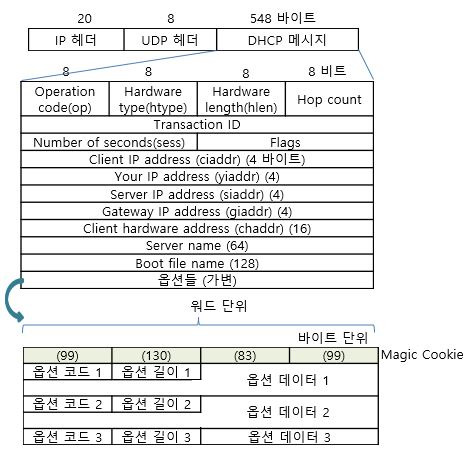
하나만 설정하면 되는게 아니라 4개의 옵션이 다 설정되어야 DHCP option 82 relay 가 적용되나 보다.
option agent.circuit-id string;
The circuit-id suboption encodes an agent-local identifier of the circuit from which a DHCP client-to- server packet was received. It is intended for use by agents in relaying DHCP responses back to the proper circuit. The format of this option is currently defined to be vendor-dependent, and will probably remain that way, although the current draft allows for the possibility of standardizing the format in the future.
option agent.remote-id string;
The remote-id suboption encodes information about the remote host end of a circuit. Examples of what it might contain include caller ID information, username information, remote ATM address, cable modem ID, and similar things. In principal, the meaning is not well-specified, and it should generally be assumed to be an opaque object that is administratively guaranteed to be unique to a particular remote end of a circuit.
option agent.DOCSIS-device-class uint32;
The DOCSIS-device-class suboption is intended to convey information about the host endpoint, hardware, and software, that either the host operating system or the DHCP server may not otherwise be aware of (but the relay is able to distinguish). This is implemented as a 32-bit field (4 octets), each bit representing a flag describing the host in one of these ways. So far, only bit zero (being the least significant bit) is defined in RFC3256. If this bit is set to one, the host is considered a CPE Controlled Cable Modem (CCCM). All other bits are reserved.
option agent.link-selection ip-address;
The link-selection suboption is provided by relay agents to inform servers what subnet the client is actually attached to. This is useful in those cases where the giaddr (where responses must be sent to the relay agent) is not on the same subnet as the client. When this option is present in a packet from a relay agent, the DHCP server will use its contents to find a subnet declared in configuration, and from here take one step further backwards to any shared-network the subnet may be defined within; the client may be given any address within that shared network, as normally appropriate.