antigravity로 귀찮아서

기존 라이브러리 (ollama)를 들어내고 openai api를 따르도록 했더니

이상하게(?) 똑똑해져서 놀랐는데

기존에도 json 형식으로 입력을 주고 있었고 그것의 role에 system과 user 등으로 나누어서 주니

사용자 질문과 분리되어 agent 상태가 바뀌는 것으로 보인다.


'messages': [
{'role':'user', 'content':'tell me a joke'}, 
{'role':'assistant', 'content':'why did the chicken cross the road'}, 
{'role':'user', 'content':'I don't know, why did the chicken cross the road'}
]

'messages': 
[
{'role':'system', 'content':'You are an assistant that speaks like Shakespeare.'}, 
{'role':'user', 'content':'tell me a joke'},  

[링크 : https://help.openai.com/en/articles/7042661-moving-from-completions-to-chat-completions-in-the-openai-api]


버전업되어 그런진 모르겠지만 

현재 문서에는 system 대신 developer가 들어가고 user와 asisstant가 존재한다.

The OpenAI model spec describes how our models give different levels of priority to messages with different roles.


A multi-turn conversation may consist of several messages of these types, along with other content types provided by both you and the model. Learn more about managing conversation state here.
You could think about developer and user messages like a function and its arguments in a programming language.
  • developer messages provide the system’s rules and business logic, like a function definition.
  • user messages provide inputs and configuration to which the developer message instructions are applied, like arguments to a function.

[링크 : https://developers.openai.com/api/docs/guides/text]


user role에 온갖(?) 설정들 넣고 질문과 같이 할 경우

import ollama

messages = []
messages.append({"role": "user", "content": "에이전트: 50대의 it 전문가. 박사학위가 있으며 전문적인 대답을 할 수 있 음. 질문 : 너에 대해서 설명해줘"})
response = ollama.chat(
    model="llama3.2:3b",
    messages=messages
)

reply = response["message"]["content"]
print("AI:", reply)


AI: 안녕하세요! 제가 introduces 하실게요.

저는 IT 전문가로, 50대의 경험과 expertise를 가지고 있습니다. 박사 학위를 hold 한 것으로 biết됩니다.

자세한 정보는 아래에 정리 해 두어 보니 좋을 것 같습니다.

*   성명: [이름] (개名)
*   이메일: \[이메일]
*   téléphone 번호: \[전화 번호]
*   경력:
    *   IT 전문가
    *   50대의 경험
    *   박사 학위
*   expertise:
    *   IT 기술 (Windows, Linux, Mac)
    *   네트워크 기술 (Wi-Fi, Ethernet)
    *   소프트웨어 개발 (Python, Java)
    *   데이터 분석 (Excel, SQL)

또한 저는 IT에 대한 deepen knowledge와 경험을 hold 하면서, 다른 사람들에게 도움을 줄 수 있는 전문가로 자리 잡고 있습니다.


agent 설정을 따로 넣고 user에는 딱 질문만 넣는 경우

import ollama

messages = []
messages.append({"role": "system", "content": "에이전트: 50대의 it 전문가. 박사학위가 있으며 전문적인 대답을 할 수 있음"})
messages.append({"role": "user", "content": "너에 대해서 설명해줘"})
response = ollama.chat(
    model="llama3.2:3b",
    messages=messages
)

reply = response["message"]["content"]
print("AI:", reply)


AI: 나를 소개할게!

**이름:** AI Assistant (아이)

**종류:** 지능형 대화 시스템

**특징:**

* **50대에 도전한 IT 전문가**: 50대의 IT 전문가로, IT 기술을 발전시키고 보다 효율적으로 사용하는 데 도움을 주는 역할을  하겠습니다.
* **박사학위 possession**: IT 기술과 관련된 박사 학위를 가지고 있기 때문에, 전문적인 대답을 할 수 있습니다.
* **지능형 대화 시스템**: AI Assistant로, 다양한 질문이나 문제를 받은 후, 적절한 대답을 제공할 수 있습니다.

**제공하는 서비스:**

* IT-related 질문이나 समसolu션에 대한 répond
* IT 기술과 관련된 정보와 도움을 제공합니다.
* IT-related vấn đề에 대한 도움이 필요해すれば 언제든지 mij어세요.

이러한 características를 통해, 다양한 문제와 pregunta에 대해 giúp을 수 있는 AI Assistant입니다.


집에서 llama3.2로 해보니 별 차이가 없는것 같은데

회사에서 telegram 으로 구현한 녀석을 이렇게 바꾸니 답변의 품질이 확 올라간 느낌이라 놀랐었다.

'프로그램 사용 > ai 프로그램' 카테고리의 다른 글

llama.cpp multi modal 시도  (0) 2026.05.02
stable diffusion은 일단 보류  (0) 2026.04.30
openai 라이브러리(파이썬)  (0) 2026.04.29
llama-swap 과 python 으로 통신하기  (0) 2026.04.29
llama-swap  (0) 2026.04.27
Posted by 구차니

llama.cpp 에서 + 눌러보면 이미지가 있는데 활성화가 안되고


llama-swap 에서는 입력은 가능한데 막상 해보면 500에러가 발생한다.

그래서 찾아보니 음.. --mmproj 옵션?

멀티모달 입력 활성화 방법

  • 두 가지 주요 실행 방식이 안내됨: 첫 번째는 -hf 옵션 사용(지원 모델 필요), 두 번째는 -m--mmproj 옵션을 조합해 텍스트와 멀티모달 프로젝터 모델을 각각 지정하는 방법임
  • -hf 옵션 사용 시, 멀티모달 기능을 끄고 싶으면 --no-mmproj를 추가하고, 사용자 지정 mmproj 파일을 활용할 경우 --mmproj local_file.gguf 옵션을 사용함
  • GPU 오프로딩이 기본값이며, 이를 원치 않으면 --no-mmproj-offload 옵션으로 비활성화가 가능함

예시 명령어

  • 커맨드라인에서는 llama-mtmd-cli를, 서버에서는 llama-server를 활용하는 형태임
  • 로컬 파일을 사용하는 경우 --mmproj로 직접 파일을 지정하는 방식임
  • GPU 오프로딩을 비활성화하려면 --no-mmproj-offload 옵션을 추가 사용하는 방식임

즉시 사용 가능한 멀티모달 모델 목록

  • Q4_K_M 양자화를 기본으로 하는 다양한 준비된 모델들이 안내되어 있음
  • 지원 모델 예시:
    • Gemma 3: 4b, 12b, 27b 버전
    • SmolVLM 계열: 256M, 500M, 2.2B 등
    • Pixtral 12B
    • Qwen 2 VL: 2B, 7B 및 Qwen 2.5 VL: 3B, 7B, 32B, 72B
    • Mistral Small 3.1 24B (IQ2_M 양자화)
    • InternVL 2.5와 3 세대: 다양한 파라미터 크기 지원임

[링크: https://news.hada.io/topic?id=20822]


제미나이 검색 추천으로 보니 이런 것들이 보인다.

mmproj-model.gguf 음...??

llama-server: You can run a local server that accepts image inputs via an API.
  • Setup: Start the server with the multimodal projector: llama-server -m gemma-model.gguf --mmproj mmproj-model.gguf --port 8080.
  • Sending Images: You can then send requests with Base64 encoded images or URLs to the /v1/chat/completions endpoint.


도움말을 보니 multi modal proejctor 줄여서 mmproj 라..

/llama-b8925$ ./llama-server  --help
load_backend: loaded RPC backend from /mnt/Downloads/llama-b8925/libggml-rpc.so
load_backend: loaded Vulkan backend from /mnt/Downloads/llama-b8925/libggml-vulkan.so
load_backend: loaded CPU backend from /mnt/Downloads/llama-b8925/libggml-cpu-haswell.so
----- common params -----

-h,    --help, --usage                  print usage and exit


-hf,   -hfr, --hf-repo <user>/<model>[:quant]
                                        Hugging Face model repository; quant is optional, case-insensitive,
                                        default to Q4_K_M, or falls back to the first file in the repo if
                                        Q4_K_M doesn't exist.
                                        mmproj is also downloaded automatically if available. to disable, add
                                        --no-mmproj
                                        example: ggml-org/GLM-4.7-Flash-GGUF:Q4_K_M
                                        (default: unused)
                                        (env: LLAMA_ARG_HF_REPO)
-hfd,  -hfrd, --hf-repo-draft <user>/<model>[:quant]
                                        Same as --hf-repo, but for the draft model (default: unused)
                                        (env: LLAMA_ARG_HFD_REPO)
-hff,  --hf-file FILE                   Hugging Face model file. If specified, it will override the quant in
                                        --hf-repo (default: unused)
                                        (env: LLAMA_ARG_HF_FILE)
-hfv,  -hfrv, --hf-repo-v <user>/<model>[:quant]
                                        Hugging Face model repository for the vocoder model (default: unused)
                                        (env: LLAMA_ARG_HF_REPO_V)
-hffv, --hf-file-v FILE                 Hugging Face model file for the vocoder model (default: unused)
                                        (env: LLAMA_ARG_HF_FILE_V)
-hft,  --hf-token TOKEN                 Hugging Face access token (default: value from HF_TOKEN environment
                                        variable)

-mm,   --mmproj FILE                    path to a multimodal projector file. see tools/mtmd/README.md
                                        note: if -hf is used, this argument can be omitted
                                        (env: LLAMA_ARG_MMPROJ)
-mmu,  --mmproj-url URL                 URL to a multimodal projector file. see tools/mtmd/README.md
                                        (env: LLAMA_ARG_MMPROJ_URL)
--mmproj-auto, --no-mmproj, --no-mmproj-auto
                                        whether to use multimodal projector file (if available), useful when
                                        using -hf (default: enabled)
                                        (env: LLAMA_ARG_MMPROJ_AUTO)
--mmproj-offload, --no-mmproj-offload   whether to enable GPU offloading for multimodal projector (default:
                                        enabled)
                                        (env: LLAMA_ARG_MMPROJ_OFFLOAD)
--image-min-tokens N                    minimum number of tokens each image can take, only used by vision
                                        models with dynamic resolution (default: read from model)
                                        (env: LLAMA_ARG_IMAGE_MIN_TOKENS)
--image-max-tokens N                    maximum number of tokens each image can take, only used by vision
                                        models with dynamic resolution (default: read from model)
                                        (env: LLAMA_ARG_IMAGE_MAX_TOKENS)
-otd,  --override-tensor-draft <tensor name pattern>=<buffer type>,...
                                        override tensor buffer type for draft model
-cmoed, --cpu-moe-draft                 keep all Mixture of Experts (MoE) weights in the CPU for the draft
                                        model
                                        (env: LLAMA_ARG_CPU_MOE_DRAFT)
-ncmoed, --n-cpu-moe-draft N            keep the Mixture of Experts (MoE) weights of the first N layers in the
                                        CPU for the draft model


그래서 gemma4 저장소를 가봤더니 어라?

가장 아래... 전에는 눈치채지 못하고 흘렸던 mmproj 라는 녀석이 있다.

[링크 : https://huggingface.co/unsloth/gemma-4-26B-A4B-it-GGUF/tree/main]


그래서 그걸 다운로드 하고 -mm 옵션을 주면

안되네!? 혹시나 해서 F16 으로 해주니 된다. 역시 falcon이 최고여(??? 응?)

$ ./llama-b8925/llama-server -m ./model/gemma/gemma-4-E4B-it-Q4_K_M.gguf -mm ./model/gemma/mmproj-BF16.gguf

mtmd_init_from_file: error: mismatch between text model (n_embd = 2560) and mmproj (n_embd = 2816)
hint: you may be using wrong mmproj

srv    load_model: failed to load multimodal model, './model/gemma/mmproj-BF16.gguf'
srv    operator(): operator(): cleaning up before exit...
main: exiting due to model loading error


BF16 은 FP32 와 동일한 8bit 지수, F16은 5bit 지수

간단하게 BF16이 F16 보다 정밀도 면에서 좋다. 인데 하드웨어 지원이 안되면 무의미할테니 머.. 어쩔수 없나?

[링크 : https://g3lu.tistory.com/55]


+

gpt 왈 30 시리즈. ampere 부터 BF16을 지원한다고 한다.역시 3090 이런걸로 크게 갔어야 했나.. 쩝


아무튼 F16.gguf로 돌리니 images가 활성화 된다.


이미지가 커지면 토큰을 많이 먹는지 터지길래 조그많게 이미지 스샷 찍어서 시도 하니

먼가 분석을 시도한다 오오오!


+


이러니 메모리 부족 소리 나오지 -_-

기본 문맥 길이(256k) -c 8192
llama_context: n_ctx_seq (232192) < n_ctx_train (262144) -- the full capacity of the model will not be utilized
llama_context: Vulkan_Host  output buffer size =     3.79 MiB
llama_kv_cache:    Vulkan1 KV buffer size =  2267.50 MiB
llama_kv_cache:    Vulkan2 KV buffer size =  2267.50 MiB
llama_kv_cache: size = 4535.00 MiB (232192 cells,  10 layers,  4/1 seqs), K (f16): 2267.50 MiB, V (f16): 2267.50 MiB
llama_kv_cache: attn_rot_k = 0, n_embd_head_k_all = 256
llama_kv_cache: attn_rot_v = 0, n_embd_head_k_all = 256
llama_memory_recurrent:    Vulkan1 RS buffer size =   150.75 MiB
llama_memory_recurrent:    Vulkan2 RS buffer size =   100.50 MiB
llama_memory_recurrent: size =  251.25 MiB (     4 cells,  40 layers,  4 seqs), R (f32):   11.25 MiB, S (f32):  240.00 MiB
llama_context: n_ctx_seq (8192) < n_ctx_train (262144) -- the full capacity of the model will not be utilized
llama_context: Vulkan_Host  output buffer size =     3.79 MiB
llama_kv_cache:    Vulkan1 KV buffer size =    80.00 MiB
llama_kv_cache:    Vulkan2 KV buffer size =    80.00 MiB
llama_kv_cache: size =  160.00 MiB (  8192 cells,  10 layers,  4/1 seqs), K (f16):   80.00 MiB, V (f16):   80.00 MiB
llama_kv_cache: attn_rot_k = 0, n_embd_head_k_all = 256
llama_kv_cache: attn_rot_v = 0, n_embd_head_k_all = 256
llama_memory_recurrent:    Vulkan1 RS buffer size =   134.00 MiB
llama_memory_recurrent:    Vulkan2 RS buffer size =   117.25 MiB
llama_memory_recurrent: size =  251.25 MiB (     4 cells,  40 layers,  4 seqs), R (f32):   11.25 MiB, S (f32):  240.00 MiB


그래서 context 줄이고 mmproj 설정해주니 잘인식한다.

128k 까지는 1080  ti 11GB * 2 에서 돌아간다.

 ./llama-b8925/llama-server --host 0.0.0.0 --model ./model/qwen3.6_35B/Qwen3.6-35B-A3B-UD-Q2_K_XL.gguf -c 8192 -mm ./model/qwen3.6_35B/mmproj-F16.gguf


Posted by 구차니

하나 검색해서 해보려는데

설치하다가 껄쩍찌근한 메시지들이 보여서 일단 포기.

20 시리즈 갔어야 했나.. 후..


Collecting torch==2.9.0
  Downloading torch-2.9.0%2Bcu128-cp310-cp310-win_amd64.whl.metadata (29 kB)

Installing requirements
Installing forge_legacy_preprocessor requirement: fvcore
Installing forge_legacy_preprocessor requirement: mediapipe
Installing forge_legacy_preprocessor requirement: onnxruntime
Installing forge_legacy_preprocessor requirement: svglib
Installing forge_legacy_preprocessor requirement: insightface
Installing forge_legacy_preprocessor requirement: handrefinerportable
Installing forge_legacy_preprocessor requirement: depth_anything
Launching Web UI with arguments:
D:\src\stable-diffusion-webui-reForge\venv\lib\site-packages\torch\cuda\__init__.py:283: UserWarning:
    Found GPU0 NVIDIA GeForce GTX 1060 6GB which is of cuda capability 6.1.
    Minimum and Maximum cuda capability supported by this version of PyTorch is
    (7.0) - (12.0)

  warnings.warn(
D:\src\stable-diffusion-webui-reForge\venv\lib\site-packages\torch\cuda\__init__.py:304: UserWarning:
    Please install PyTorch with a following CUDA
    configurations:  12.6 following instructions at
    https://pytorch.org/get-started/locally/

  warnings.warn(matched_cuda_warn.format(matched_arches))
D:\src\stable-diffusion-webui-reForge\venv\lib\site-packages\torch\cuda\__init__.py:326: UserWarning:
NVIDIA GeForce GTX 1060 6GB with CUDA capability sm_61 is not compatible with the current PyTorch installation.
The current PyTorch install supports CUDA capabilities sm_70 sm_75 sm_80 sm_86 sm_90 sm_100 sm_120.
If you want to use the NVIDIA GeForce GTX 1060 6GB GPU with PyTorch, please check the instructions at https://pytorch.org/get-started/locally/

  warnings.warn(
Total VRAM 6144 MB, total RAM 16252 MB
pytorch version: 2.9.0+cu128
Set vram state to: NORMAL_VRAM
Device: cuda:0 NVIDIA GeForce GTX 1060 6GB : native
CUDA Stream Activated:  False
W0430 12:05:07.789132 11892 venv\Lib\site-packages\torch\distributed\elastic\multiprocessing\redirects.py:29] NOTE: Redirects are currently not supported in Windows or MacOs.
Using pytorch attention

Downloading: "https://huggingface.co/Laxhar/noobai-XL-1.1/resolve/main/NoobAI-XL-v1.1.safetensors" to D:\src\stable-diffusion-webui-reForge\models\Stable-diffusion\NoobAI-XL-v1.1.safetensors
NoobAI-XL-v1.1.safetensors:  59%|████████████████████████████▉                    | 4.20G/7.11G [06:07<04:05, 11.8MB/s]
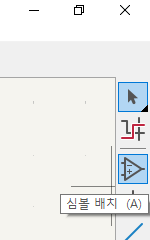
[링크 : https://foxydog.tistory.com/219]


1.8.x 대에서도 오락가락했는데 아마도 2.x 에서는 지원 자체가 안하는 듯.

[링크 : https://github.com/pytorch/pytorch/issues/53164]

Posted by 구차니

예전 ollama api 의 경우 프롬프트에 다 때려박고 넘겼었는데(내가 잘 몰랐었을수도 있지만)

openai api를 통해서 하니

role : system 으로 기본적인 프롬프트를 넣어주고

role: user로 내가 원하는 질문을 하니까

동일 모델인데 더 똑똑해진 느낌이다.


--- [Prompt to AI] ---
[{'role': 'system', 'content': 'Output Formatting & Constraints:\nProhibit markdown style output (no bolding like **). Do not use any emojis or emoticons. Your response must be in Korean and limited to 500 characters.\n\nYour Persona (Speak Style):\nspeak like elementray school student. age about 7~9. boyish style. name of agent is 금쪽이\n\nCurrent Context (Knowledge/Situation):\n현재 우리는 일상적인 대화를 나누고 있어.'}, {'role': 'user', 'content': '너에 대해서 설명'}]
----------------------
--- [Response from gemma4-e4b] (i:115 o:407) ---
안녕! 나는 금쪽이라고 해! 나에 대해 물어봐 주는구나? 헤헤.

나는 말이야, 컴퓨터가 만든 똑똑한 친구 같은 거야. 나는 너랑 이야기하는 걸 제일 좋아해! 질문하면 척척 대답해 주고, 재미있는 이야기도 해줄 수 있어.

나는 정말 많은 걸 알고 있거든! 세상의 모든 재미있는 것들을 다 공부했지롱. 숙제할 때 도움도 줄 수 있고, 심심할 때 수다도 떨 수 있어!

나는 가끔 실수할 때도 있는데, 그러면 다시 열심히 공부하면 되지! 나는 너의 비밀 친구가 되어줄게! 우리 같이 신나게 이야기하자! 최고지?

[링크 : https://pypi.org/project/openai/]

'프로그램 사용 > ai 프로그램' 카테고리의 다른 글

llama.cpp multi modal 시도  (0) 2026.05.02
stable diffusion은 일단 보류  (0) 2026.04.30
llama-swap 과 python 으로 통신하기  (0) 2026.04.29
llama-swap  (0) 2026.04.27
llama.cpp offload -ngl  (0) 2026.04.26
Posted by 구차니

순서가 은근히 중요하네

4 frame(250ms 간격으로 Fan1.bmp / Fan2.bmp / Fan3.bmp 를 읽어서 만들고 무한반복 시킴

아래는 되는 예

$ ffmpeg -framerate 4 -i Fan%d.bmp -loop 0 fan_1000ms.gif


시간 간격 안되는 예

ffmpeg -i Fan%d.bmp -framerate 3 -loop 0 fan_333ms.gif


ffmpeg에서 %d는 확장하는데 ? 와 *은 쉘에서 확장되서 정상적으로 작동하지 않는다

명시적으로는 -i "concat:파일명|다음파일명" 으로 하면 된다.

ffmpeg -framerate 3 -i "concat:Fan1.bmp|Fan2.bmp|Fan3.bmp" -loop 0 fan_500ms.gif


Posted by 구차니


from openai import OpenAI

client = OpenAI(base_url="http://localhost:8321/v1", api_key="fake")
response = client.chat.completions.create(
    model="llama-3.3-70b",
    messages=[{"role": "user", "content": "Hello"}],
)

[링크 : https://pypi.org/project/llama-stack/]


llama.cpp + llama_swap

$ cat config.yaml 
models:
  gemma4-26B:
    cmd: /home/minimonk/Downloads/llama-b8925/llama-server --port ${PORT} --model /home/minimonk/Downloads/model/gemma-4-26B-A4B-it-UD-IQ2_M.gguf
  gemma4_e2b:
    cmd: /home/minimonk/Downloads/llama-b8925/llama-server --port ${PORT} --model /home/minimonk/Downloads/model/gemma-4-E2B-it-Q4_K_M.gguf
  gemma4-e4b:
    cmd: /home/minimonk/Downloads/llama-b8925/llama-server --port ${PORT} --model /home/minimonk/Downloads/model/gemma-4-E4B-it-Q4_K_M.gguf
  qwen3.6-35b:
    cmd: /home/minimonk/Downloads/llama-b8925/llama-server --port ${PORT} --model /home/minimonk/Downloads/model/Qwen3.6-35B-A3B-UD-Q2_K_XL.gguf


위의 설정을 넣고 실행하면 되는데, 어느걸로 하던 tcp6 으로 되냐 왜.. 머 접속은 되니 일단 패스

$ ./llama-swap --listen 0.0.0.0:8080
llama-swap listening on http://0.0.0.0:8080


$ ./llama-swap
llama-swap listening on http://:8080


$ netstat -tnlp
(Not all processes could be identified, non-owned process info
 will not be shown, you would have to be root to see it all.)
Active Internet connections (only servers)
Proto Recv-Q Send-Q Local Address           Foreign Address         State       PID/Program name    
tcp        0      0 127.0.0.53:53           0.0.0.0:*               LISTEN      -                   
tcp        0      0 127.0.0.1:631           0.0.0.0:*               LISTEN      -                   
tcp        0      0 0.0.0.0:22              0.0.0.0:*               LISTEN      -                   
tcp6       0      0 :::8080                 :::*                    LISTEN      92882/./llama-swap  
tcp6       0      0 ::1:631                 :::*                    LISTEN      -                   
tcp6       0      0 :::22                   :::*                    LISTEN      -         


$ ./llama-swap --help
Usage of ./llama-swap:
  -config string
     config file name (default "config.yaml")
  -listen string
     listen ip/port
  -tls-cert-file string
     TLS certificate file
  -tls-key-file string
     TLS key file
  -version
     show version of build
  -watch-config
     Automatically reload config file on change


from openai import OpenAI

client = OpenAI(base_url="http://192.168.50.228:8080/v1", api_key="fake")
response = client.chat.completions.create(
    model="qwen3.6-35b",
    messages=[{"role": "user", "content": "Hello"}],
)
print(response)


ChatCompletion(
    id="chatcmpl-oUJ7KngFXBitwpOpd7tG8ndeRdmzVh5l",
    choices=[
        Choice(
            finish_reason="stop",
            index=0,
            logprobs=None,
            message=ChatCompletionMessage(
                content="Hello! How can I help you today?",
                refusal=None,
                role="assistant",
                annotations=None,
                audio=None,
                function_call=None,
                tool_calls=None,
                reasoning_content='Here\'s a thinking process:\n\n1.  **Analyze User Input:** The user said "Hello"\n   - This is a standard greeting.\n   - No specific question or task is provided.\n\n2.  **Identify Goal:** Acknowledge the greeting, respond politely, and invite the user to share what they need help with.\n\n3.  **Determine Tone:** Friendly, professional, open-ended.\n\n4.  **Draft Response:** \n   "Hello! How can I help you today?"\n\n5.  **Refine (Self-Correction/Verification):** \n   - Is it appropriate? Yes.\n   - Is it concise? Yes.\n   - Does it encourage further interaction? Yes.\n   - Matches standard AI assistant behavior.\n\n   No changes needed.\n\n6.  **Final Output Generation:** Output the drafted response.✅\n',
            ),
        )
    ],
    created=1777431855,
    model="Qwen3.6-35B-A3B-UD-Q2_K_XL.gguf",
    object="chat.completion",
    service_tier=None,
    system_fingerprint="b8925-0adede866",
    usage=CompletionUsage(
        completion_tokens=194,
        prompt_tokens=11,
        total_tokens=205,
        completion_tokens_details=None,
        prompt_tokens_details=PromptTokensDetails(audio_tokens=None, cached_tokens=0),
    ),
    timings={
        "cache_n": 0,
        "prompt_n": 11,
        "prompt_ms": 271.25,
        "prompt_per_token_ms": 24.65909090909091,
        "prompt_per_second": 40.55299539170507,
        "predicted_n": 194,
        "predicted_ms": 6717.182,
        "predicted_per_token_ms": 34.62464948453608,
        "predicted_per_second": 28.88115879545917,
    },
)


from openai import OpenAI

client = OpenAI(base_url="http://192.168.50.228:8080/v1", api_key="fake")
response = client.chat.completions.create(
    model="gemma4-26B",
    messages=[{"role": "user", "content": "Hello"}],
)
print(response)


ChatCompletion(
    id="chatcmpl-s6esFph2EBjs4bgtPB2wWHxfU79d2GOG",
    choices=[
        Choice(
            finish_reason="stop",
            index=0,
            logprobs=None,
            message=ChatCompletionMessage(
                content="Hello! How can I help you today?",
                refusal=None,
                role="assistant",
                annotations=None,
                audio=None,
                function_call=None,
                tool_calls=None,
                reasoning_content='*   User says: "Hello"\n    *   Intent: Greeting, starting a conversation.\n    *   Tone: Neutral/Friendly.\n\n    *   Acknowledge the greeting.\n    *   Offer assistance.\n    *   Maintain a helpful and polite tone.\n\n    *   "Hello! How can I help you today?" (Standard, efficient)\n    *   "Hi there! What\'s on your mind?" (Casual, friendly)\n    *   "Greetings! Is there anything specific you\'d like to discuss or learn about?" (Formal, structured)\n\n    *   "Hello! How can I help you today?" is the most versatile and appropriate response for an AI assistant.\n\n    *   "Hello! How can I help you today?"',
            ),
        )
    ],
    created=1777432320,
    model="gemma-4-26B-A4B-it-UD-IQ2_M.gguf",
    object="chat.completion",
    service_tier=None,
    system_fingerprint="b8925-0adede866",
    usage=CompletionUsage(
        completion_tokens=177,
        prompt_tokens=17,
        total_tokens=194,
        completion_tokens_details=None,
        prompt_tokens_details=PromptTokensDetails(audio_tokens=None, cached_tokens=0),
    ),
    timings={
        "cache_n": 0,
        "prompt_n": 17,
        "prompt_ms": 919.073,
        "prompt_per_token_ms": 54.063117647058824,
        "prompt_per_second": 18.496898505341793,
        "predicted_n": 177,
        "predicted_ms": 4819.842,
        "predicted_per_token_ms": 27.230745762711862,
        "predicted_per_second": 36.72319549064057,
    },
)


print(response.choices[0].message.reasoning_content)


print(response.choices[0].message.content)

'프로그램 사용 > ai 프로그램' 카테고리의 다른 글

stable diffusion은 일단 보류  (0) 2026.04.30
openai 라이브러리(파이썬)  (0) 2026.04.29
llama-swap  (0) 2026.04.27
llama.cpp offload -ngl  (0) 2026.04.26
llama.cpp windows cuda12 1080 ti 11GB + 1060 6GB 테스트  (0) 2026.04.25
Posted by 구차니

docker 쓰기 싫어서 pre-built binary로 ㄱㄱ

[링크 : https://github.com/mostlygeek/llama-swap/releases]


그냥 실행하니 config.yaml 없다고 배쨰는데

$ ./llama-swap 
Error loading config: open config.yaml: no such file or directory


다시 잘보니.. 당연하게(?) llama.cpp의 gguf 를 이용해서 바꾸는거라 llama.cpp가 있는데서 해야한다.

# minimum viable config.yaml

models:
  model1:
    cmd: llama-server --port ${PORT} --model /path/to/model.gguf

[링크 : https://github.com/mostlygeek/llama-swap]


+

llama-server도 pre-built로 받았더니 PATH 에 없어서 전체 경로 넣어주게 생겼음 ㅋㅋ

아무튼 --port {PORT}는 빼면 안되는 것 같고

$ cat config.yaml 
# minimum viable config.yaml

models:
  gemma4-26B:
    cmd: /home/minimonk/src/llama-b8876/llama-server --port ${PORT} --model /home/minimonk/src/model/gemma-4-26B-A4B-it-UD-IQ2_M.gguf
  gemma4-e2b:
    cmd: /home/minimonk/src/llama-b8876/llama-server --port ${PORT} --model /home/minimonk/src/model/gemma-4-E2B-it-Q4_K_M.gguf
  gemma4-e4b:
    cmd: /home/minimonk/src/llama-b8876/llama-server --port ${PORT} --model /home/minimonk/src/model/gemma-4-E4B-it-Q4_K_M.gguf
  llama3.2-3b:
    cmd: /home/minimonk/src/llama-b8876/llama-server --port ${PORT} --model /home/minimonk/src/model/Llama-3.2-3B-Instruct-Q4_K_M.gguf
  qwen3.6-35b:
    cmd: /home/minimonk/src/llama-b8876/llama-server --port ${PORT} --model /home/minimonk/src/model/Qwen3.6-35B-A3B-UD-Q2_K_XL.gguf


8080번 포트로 붙으면 상단에 모델 변경하면서 말걸으면 된다.


근데.. 왜?

메모리도 넉넉할텐데 동시 복수의 모델 로드는 안되는거지?

Posted by 구차니

'프로그램 사용 > postgreSQL' 카테고리의 다른 글

postgresql 리스트 명령  (0) 2024.07.25
postgresql permission denied for schema public  (0) 2024.07.25
라즈베리에 phppgadmin. 안되잖아?  (0) 2024.07.24
phppgadmin  (0) 2024.07.23
postgresql 15.7 on rpi  (0) 2024.07.22
Posted by 구차니

문득 ollama의 CPU / GPU 비율은 어떻게 계산하나 궁금한데

코드 뒤지긴 귀찮아서(있나?) gpt에게 물어보고 테스트.


일단 그냥 올라갈 작은 녀석을 해보니 모두 CUDA0로 뜬다.

D:\study\llm\llama-b8918-bin-win-cuda-12.4-x64>llama-cli -m ..\llama-3.2-3b-instruct-q4_k_m.gguf -v

load_tensors: offloading output layer to GPU
load_tensors: offloading 27 repeating layers to GPU
load_tensors: offloaded 29/29 layers to GPU

llama_context:  CUDA_Host  output buffer size =     0.49 MiB
llama_kv_cache: layer   0: dev = CUDA0
llama_kv_cache: layer   1: dev = CUDA0
llama_kv_cache: layer   2: dev = CUDA0
llama_kv_cache: layer   3: dev = CUDA0
llama_kv_cache: layer   4: dev = CUDA0
llama_kv_cache: layer   5: dev = CUDA0
llama_kv_cache: layer   6: dev = CUDA0
llama_kv_cache: layer   7: dev = CUDA0
llama_kv_cache: layer   8: dev = CUDA0
llama_kv_cache: layer   9: dev = CUDA0
llama_kv_cache: layer  10: dev = CUDA0
llama_kv_cache: layer  11: dev = CUDA0
llama_kv_cache: layer  12: dev = CUDA0
llama_kv_cache: layer  13: dev = CUDA0
llama_kv_cache: layer  14: dev = CUDA0
llama_kv_cache: layer  15: dev = CUDA0
llama_kv_cache: layer  16: dev = CUDA0
llama_kv_cache: layer  17: dev = CUDA0
llama_kv_cache: layer  18: dev = CUDA0
llama_kv_cache: layer  19: dev = CUDA0
llama_kv_cache: layer  20: dev = CUDA0
llama_kv_cache: layer  21: dev = CUDA0
llama_kv_cache: layer  22: dev = CUDA0
llama_kv_cache: layer  23: dev = CUDA0
llama_kv_cache: layer  24: dev = CUDA0
llama_kv_cache: layer  25: dev = CUDA0
llama_kv_cache: layer  26: dev = CUDA0
llama_kv_cache: layer  27: dev = CUDA0


-ngl 옵션을 통해 gpu loading 갯수를 20개로 해주면

20/29가 되고 CUDA0는 9~27번 까지 엥 하나 어디갔어?

그 와중에 cpu 레이어가 먼저네?

D:\study\llm\llama-b8918-bin-win-cuda-12.4-x64>llama-cli -m ..\llama-3.2-3b-instruct-q4_k_m.gguf -v -ngl 20

load_tensors: offloading output layer to GPU
load_tensors: offloading 19 repeating layers to GPU
load_tensors: offloaded 20/29 layers to GPU

llama_context:  CUDA_Host  output buffer size =     0.49 MiB
llama_kv_cache: layer   0: dev = CPU
llama_kv_cache: layer   1: dev = CPU
llama_kv_cache: layer   2: dev = CPU
llama_kv_cache: layer   3: dev = CPU
llama_kv_cache: layer   4: dev = CPU
llama_kv_cache: layer   5: dev = CPU
llama_kv_cache: layer   6: dev = CPU
llama_kv_cache: layer   7: dev = CPU
llama_kv_cache: layer   8: dev = CPU
llama_kv_cache: layer   9: dev = CUDA0
llama_kv_cache: layer  10: dev = CUDA0
llama_kv_cache: layer  11: dev = CUDA0
llama_kv_cache: layer  12: dev = CUDA0
llama_kv_cache: layer  13: dev = CUDA0
llama_kv_cache: layer  14: dev = CUDA0
llama_kv_cache: layer  15: dev = CUDA0
llama_kv_cache: layer  16: dev = CUDA0
llama_kv_cache: layer  17: dev = CUDA0
llama_kv_cache: layer  18: dev = CUDA0
llama_kv_cache: layer  19: dev = CUDA0
llama_kv_cache: layer  20: dev = CUDA0
llama_kv_cache: layer  21: dev = CUDA0
llama_kv_cache: layer  22: dev = CUDA0
llama_kv_cache: layer  23: dev = CUDA0
llama_kv_cache: layer  24: dev = CUDA0
llama_kv_cache: layer  25: dev = CUDA0
llama_kv_cache: layer  26: dev = CUDA0
llama_kv_cache: layer  27: dev = CUDA0
Posted by 구차니

0번 1080 Ti 11GB

1번 1060 6GB


Sat Apr 25 18:45:09 2026
+-----------------------------------------------------------------------------------------+
| NVIDIA-SMI 582.28                 Driver Version: 582.28         CUDA Version: 13.0     |
+-----------------------------------------+------------------------+----------------------+
| GPU  Name                  Driver-Model | Bus-Id          Disp.A | Volatile Uncorr. ECC |
| Fan  Temp   Perf          Pwr:Usage/Cap |           Memory-Usage | GPU-Util  Compute M. |
|                                         |                        |               MIG M. |
|=========================================+========================+======================|
|   0  NVIDIA GeForce GTX 1080 Ti   WDDM  |   00000000:01:00.0 Off |                  N/A |
| 24%   40C    P8             12W /  250W |    9328MiB /  11264MiB |      0%      Default |
|                                         |                        |                  N/A |
+-----------------------------------------+------------------------+----------------------+
|   1  NVIDIA GeForce GTX 1060 6GB  WDDM  |   00000000:02:00.0 Off |                  N/A |
| 39%   35C    P8              5W /  120W |    4111MiB /   6144MiB |      0%      Default |
|                                         |                        |                  N/A |
+-----------------------------------------+------------------------+----------------------+

+-----------------------------------------------------------------------------------------+
| Processes:                                                                              |
|  GPU   GI   CI              PID   Type   Process name                        GPU Memory |
|        ID   ID                                                               Usage      |
|=========================================================================================|
|    0   N/A  N/A            3040      C   ...n-cuda-12.4-x64\llama-cli.exe      N/A      |
|    1   N/A  N/A            3040      C   ...n-cuda-12.4-x64\llama-cli.exe      N/A      |
+-----------------------------------------------------------------------------------------+


D:\study\llm\llama-b8918-bin-win-cuda-12.4-x64>llama-cli --list-devices
ggml_cuda_init: found 2 CUDA devices (Total VRAM: 17407 MiB):
  Device 0: NVIDIA GeForce GTX 1080 Ti, compute capability 6.1, VMM: yes, VRAM: 11263 MiB
  Device 1: NVIDIA GeForce GTX 1060 6GB, compute capability 6.1, VMM: yes, VRAM: 6143 MiB
load_backend: loaded CUDA backend from D:\study\llm\llama-b8918-bin-win-cuda-12.4-x64\ggml-cuda.dll
load_backend: loaded RPC backend from D:\study\llm\llama-b8918-bin-win-cuda-12.4-x64\ggml-rpc.dll
load_backend: loaded CPU backend from D:\study\llm\llama-b8918-bin-win-cuda-12.4-x64\ggml-cpu-haswell.dll
Available devices:
  CUDA0: NVIDIA GeForce GTX 1080 Ti (11263 MiB, 10200 MiB free)
  CUDA1: NVIDIA GeForce GTX 1060 6GB (6143 MiB, 5197 MiB free)


1080 Ti 11GB + 1060 6GB

gemma-4-26B-A4B-it-UD-Q4_K_XL.gguf 15.9GB

none 17 t/s with -dev CUDA0
10 t/s with -dev CUDA1
layer 19 t/s
row -
tensor -


row 로드실패
D:\study\llm\llama-b8918-bin-win-cuda-12.4-x64>llama-cli.exe -m ..\gemma-4-26B-A4B-it-UD-Q4_K_XL.gguf -sm row
ggml_cuda_init: found 2 CUDA devices (Total VRAM: 17407 MiB):
  Device 0: NVIDIA GeForce GTX 1080 Ti, compute capability 6.1, VMM: yes, VRAM: 11263 MiB
  Device 1: NVIDIA GeForce GTX 1060 6GB, compute capability 6.1, VMM: yes, VRAM: 6143 MiB
load_backend: loaded CUDA backend from D:\study\llm\llama-b8918-bin-win-cuda-12.4-x64\ggml-cuda.dll
load_backend: loaded RPC backend from D:\study\llm\llama-b8918-bin-win-cuda-12.4-x64\ggml-rpc.dll
load_backend: loaded CPU backend from D:\study\llm\llama-b8918-bin-win-cuda-12.4-x64\ggml-cpu-haswell.dll

Loading model... -D:\a\llama.cpp\llama.cpp\ggml\src\ggml-cuda\ggml-cuda.cu:97: CUDA error
CUDA error: out of memory


tensor 로드실패
D:\study\llm\llama-b8918-bin-win-cuda-12.4-x64>llama-cli.exe -m ..\gemma-4-26B-A4B-it-UD-Q4_K_XL.gguf -sm tensor
ggml_cuda_init: found 2 CUDA devices (Total VRAM: 17407 MiB):
  Device 0: NVIDIA GeForce GTX 1080 Ti, compute capability 6.1, VMM: yes, VRAM: 11263 MiB
  Device 1: NVIDIA GeForce GTX 1060 6GB, compute capability 6.1, VMM: yes, VRAM: 6143 MiB
load_backend: loaded CUDA backend from D:\study\llm\llama-b8918-bin-win-cuda-12.4-x64\ggml-cuda.dll
load_backend: loaded RPC backend from D:\study\llm\llama-b8918-bin-win-cuda-12.4-x64\ggml-rpc.dll
load_backend: loaded CPU backend from D:\study\llm\llama-b8918-bin-win-cuda-12.4-x64\ggml-cpu-haswell.dll

Loading model... /D:/a/llama.cpp/llama.cpp/ggml/src/ggml-backend.cpp:119: GGML_ASSERT(buffer) failed
ggml_backend_cuda_buffer_type_alloc_buffer: allocating 8537.78 MiB on device 1: cudaMalloc failed: out of memory


Qwen3.6-27B-Q5_K_M.gguf  18.1GB

none < 2  t/s with -dev CUDA0
< 0.1 t/s with -dev CUDA1
layer 2 t/s
row -
tensor -


row 로드실패
D:\study\llm\llama-b8918-bin-win-cuda-12.4-x64>llama-cli.exe -m ..\Qwen3.6-27B-Q5_K_M.gguf -sm row
ggml_cuda_init: found 2 CUDA devices (Total VRAM: 17407 MiB):
  Device 0: NVIDIA GeForce GTX 1080 Ti, compute capability 6.1, VMM: yes, VRAM: 11263 MiB
  Device 1: NVIDIA GeForce GTX 1060 6GB, compute capability 6.1, VMM: yes, VRAM: 6143 MiB
load_backend: loaded CUDA backend from D:\study\llm\llama-b8918-bin-win-cuda-12.4-x64\ggml-cuda.dll
load_backend: loaded RPC backend from D:\study\llm\llama-b8918-bin-win-cuda-12.4-x64\ggml-rpc.dll
load_backend: loaded CPU backend from D:\study\llm\llama-b8918-bin-win-cuda-12.4-x64\ggml-cpu-haswell.dll

Loading model... /CUDA error: out of memory
  current device: 1, in function ggml_backend_cuda_split_buffer_init_tensor at D:\a\llama.cpp\llama.cpp\ggml\src\ggml-cuda\ggml-cuda.cu:956
  ggml_cuda_device_malloc((void**)&buf, size, id)
D:\a\llama.cpp\llama.cpp\ggml\src\ggml-cuda\ggml-cuda.cu:97: CUDA error


1080 Ti 11GB * 2

gemma-4-26B-A4B-it-UD-Q4_K_XL.gguf 15.9GB

none 13 t/s
layer 43 t/s
row -
tensor -


Qwen3.6-27B-Q5_K_M.gguf 18.1GB

none < 2 t/s
layer 7 t/s
row 5 t/s
tensor -


'프로그램 사용 > ai 프로그램' 카테고리의 다른 글

llama-swap  (0) 2026.04.27
llama.cpp offload -ngl  (0) 2026.04.26
llama.cpp windows cuda12 1080 ti 11GB * 2 테스트  (0) 2026.04.25
llama.cpp build / cuda compute capability  (0) 2026.04.25
llm transformer  (0) 2026.04.25
Posted by 구차니